


Graphic screen printing — gig posters, art prints & foil editions
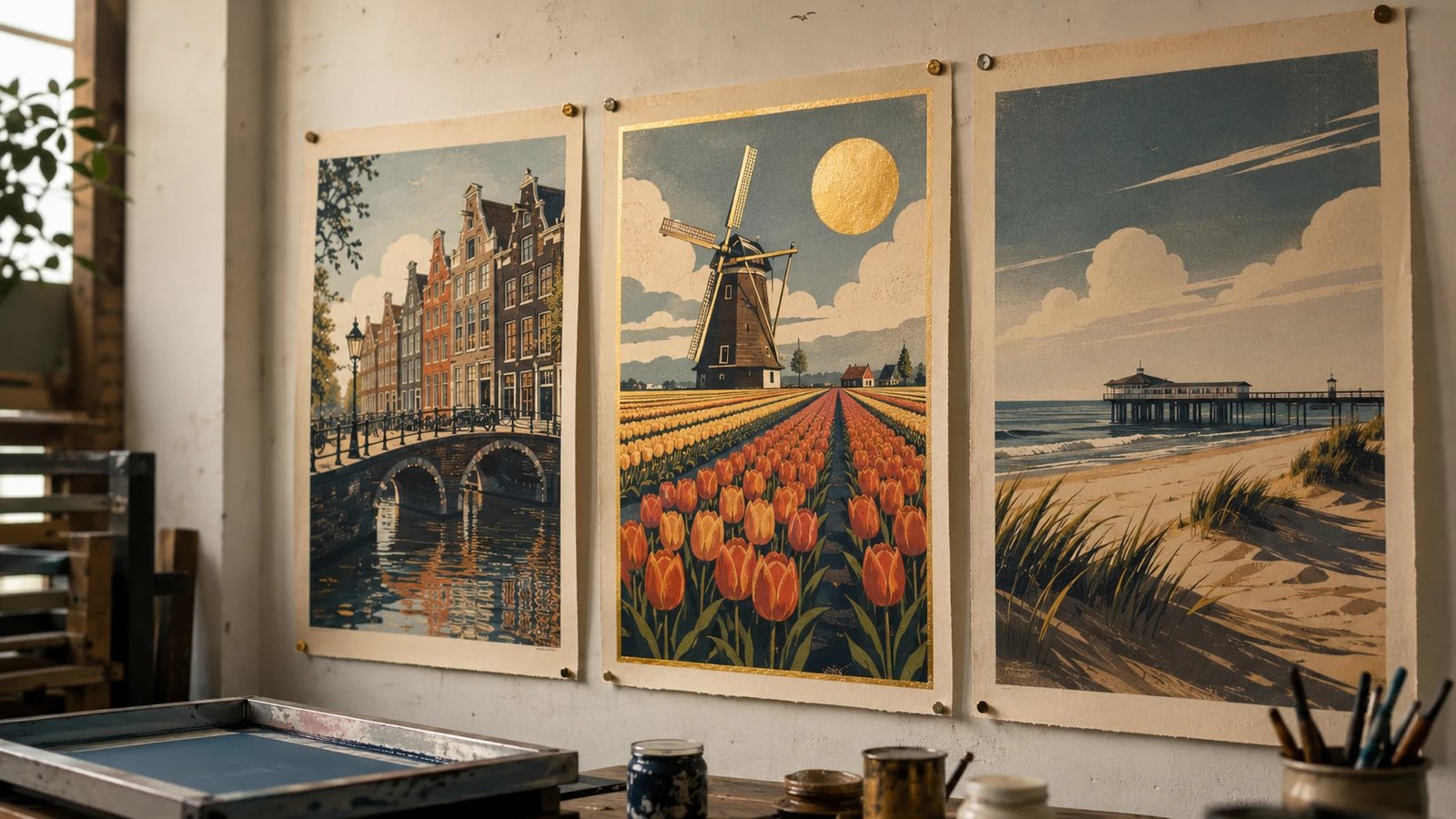
Screen printing on paper, with the same craftsmanship as our textile printing. From gig and tour posters for bands, artists and venues to limited-edition art prints for galleries, illustrators, theatres and festivals. Numbered runs, up to 70×100 cm, unlimited number of Pantone colours by arrangement — optionally with foil printing accents (gold, silver or holographic, up to 30×30 cm) and debossing.
Why screen printing on paper?
Digital printing can make posters in a few seconds. Screen printing requires more preparation and costs more per piece. So why choose it?
Character that digital can't match
The ink sits on top of the paper — a tactile surface you can feel. Effects such as metallic, fluorescent and glow-in-the-dark are beyond digital.
Vibrant colours
Pure Pantone pigments instead of a CMYK screen. Flat, intense colours — ideal for poster-style designs.
Collectible value
A handmade object with variation between copies. Perfect for limited editions and signed & numbered art prints — for which collectors pay a premium.
Long lifespan
Good ink on decent paper does not fade. Ideal for archives, anniversaries and work that hangs on the wall for decades.
What we print
We print screen-printed posters for a wide range of customers and purposes.
Galleries, illustrators & art prints
Limited-edition art prints, signed & numbered — usually 50–200 pieces, often with artist proofs.
Museums, theatres & cultural institutions
Exhibition and performance posters and anniversary editions. More character than digital — for publicity and the museum shop alike.
Businesses, anniversaries & corporate art
Capture a milestone, anniversary or launch in a poster. Limited run, matched exactly to your brand colours in Pantone.
Tour posters, gig posters & festival merch
The classic band/festival application: tour, gig and album-launch posters. For tours we deliver in line with the route — see also our events page.
Breweries, retailers & craft brands
Branded posters for retail display, anniversary editions and label art — a good fit for craft brewers and specialty retailers.
General promotion & keepsakes
Sports clubs, schools, municipalities and private individuals. Minimum run 25 pieces; for one or two pieces, digital is more practical.
Sizes and specs
Sizes
From A5 to 70×100 cm (our maximum). Most requested: A2, 50×70 cm (the European gig-poster format) and B2. Intermediate sizes such as 50×50 or 60×80 cm by arrangement.
Run size
From small limited editions (25–50, signed & numbered) to runs of 500–1,000 for festival merch and campaigns. From as few as ±25 pieces.
Foil printing & debossing as finishing
Besides screen printing inks, we can apply two finishing techniques: foil printing (hot foil stamping) and debossing. Both are done on the same machine as the final production step, after the screen printing inks have been printed and dried.
Foil printing (hot foil stamping)
A heated metal die presses a thin layer of foil onto the paper. A glossy, metallic or holographic effect that ink cannot achieve. We apply foil printing as an accent on a smaller format, up to a maximum of 30×30 cm — for example a title, logo or detail, not across the whole poster.
Available foils
- Gold, silver, copper, bronze
- Holographic and rainbow
- Coloured foils (red, blue, green, black, white)
Works best on accent elements (typography, logos, edition numbers). Minimum paper weight 200 g/m². Worthwhile from runs of 50 pieces.
Debossing (relief in the paper)
A die presses the paper down — the design becomes recessed. A subtle tactile relief, no colour, no foil.
Typical applications
- Logos and monograms on premium print work
- Signatures and edition numbers on limited prints
- Notebook covers for corporate kits
Works best on smaller accent elements (max. 10×10 cm). Minimum paper weight 250 g/m². Worthwhile from 50 pieces.
Combining foil printing and debossing?
Yes, in two separate print passes on different elements. For example a gold foil title and a blind-deboss logo at the bottom.
We don't do a combined foil-emboss (foil + relief on the exact same element) — that requires a separate combination die.
Limited edition: signed & numbered
How does it work?
- You decide the edition size, for example 50, 100 or 200 copies. Once set, no reproduction.
- We print the run + a few artist proofs (APs) for the illustrator/publisher as a reserve
- Each copy gets an edition number (for example 23/100), by hand or by stamp
- The artist or band signs each copy (can also be done with gold foil instead of pen)
- We package in protective sleeves or poster tubes
When do you choose this?
- You've engaged an illustrator who has their own following
- You want to make it a collector's item that holds its value
- It's a year-end or release moment that you want to capture permanently
- You want a poster to resell as a secondary-market item
When NOT to
- You want large runs for general promotion (a waste of the effort)
- You have no illustrator or artist willing to sign
- It's a quick club-show flyer (a plain open edition is much more practical)
Graphic screen printing process
1. Supplying the design
We prefer to work with vector files (AI or EPS) with the colour separations already done. Have raster files? Then the file must be at least 300 DPI at actual size. For foil elements, supply a separate black-and-white layer that shows exactly where the foil should go.
Read all file specs on the file supply page.
2. Choosing paper
We advise you on the paper type based on the design and the intended use. Standard 100# poster board works for most posters; for art prints we often recommend Munken or French stocks. For foil, at least 200 g/m².
3. Proof
Before production starts we print a proof (1 copy) so you can see the colours for real. Pantone codes on paper can look slightly different from on your screen; that's normal and the proof catches it. For foil applications we often include a foil test as well.
4. Production
We run a separate production pass for each colour, with drying time between each colour.
5. Finishing
Optional:
- Edition numbering (handwritten or stamp)
- Signing by the artist, either at our premises (come by) or we send it to the signatory
- Foil stamping as the final layer
- Packaging in poster tubes, plastic sleeves or flat boxes
6. Delivery
Posters are never shipped folded, always in sturdy tubes or flat boxes to prevent creasing.
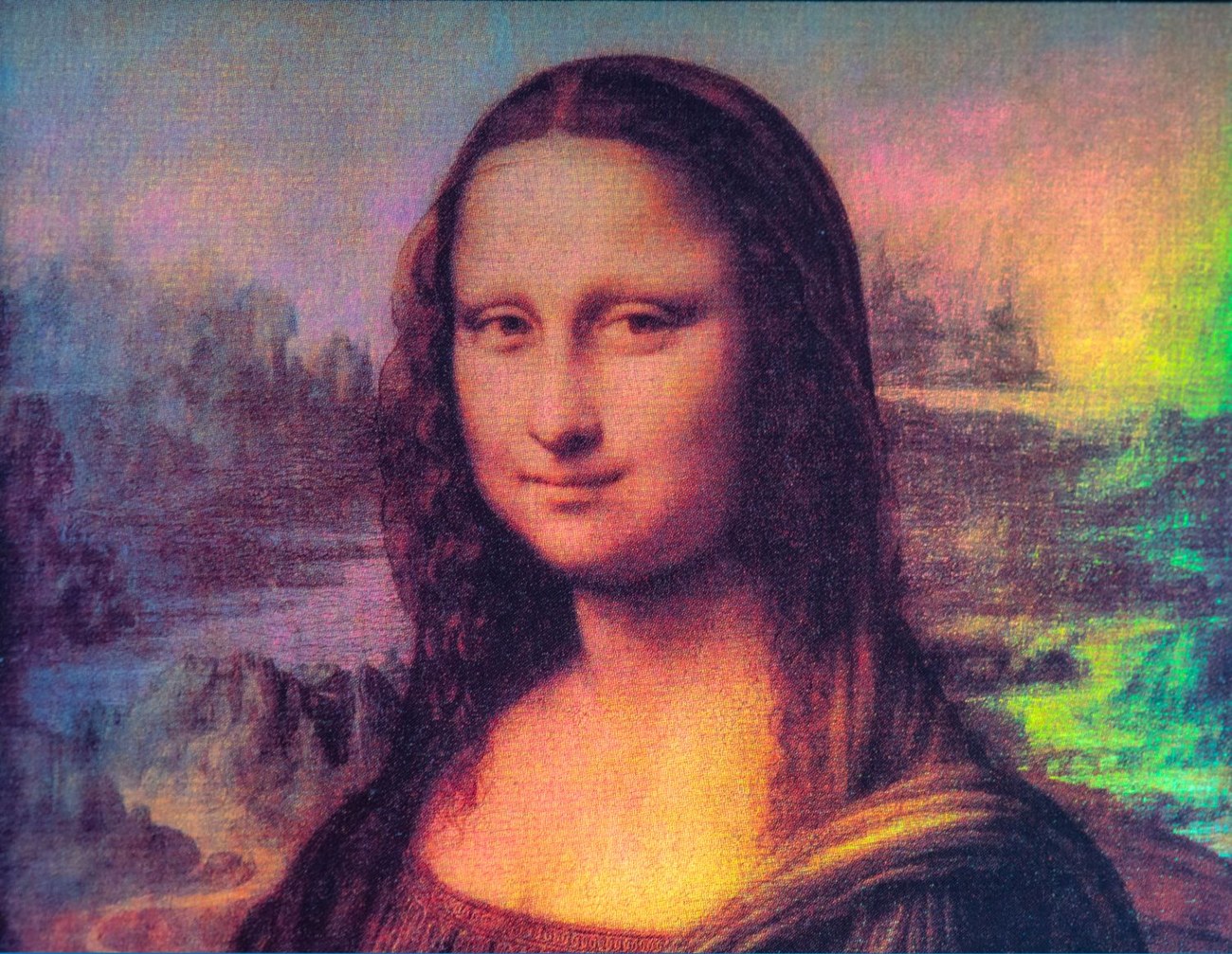
This is what it looks like in real life
Photos say more than text. This is a recent project from our print shop, from proof to finished product, all in-house.
Ready to have your poster printed?
Send us your design (or describe it) plus size, number of colours, run size, preferred paper type and any foil. We’ll get back to you with a quote and advice.