


Care instructions for printed and embroidered clothing
Printed and embroidered clothing can last for years — if you wash it properly. The right temperature, a mild detergent and a few simple habits make the difference between long-lasting enjoyment and a faded print after a few washes. Below are our concrete tips so you can enjoy your shirts and workwear for as long as possible.
General tips
The main rule
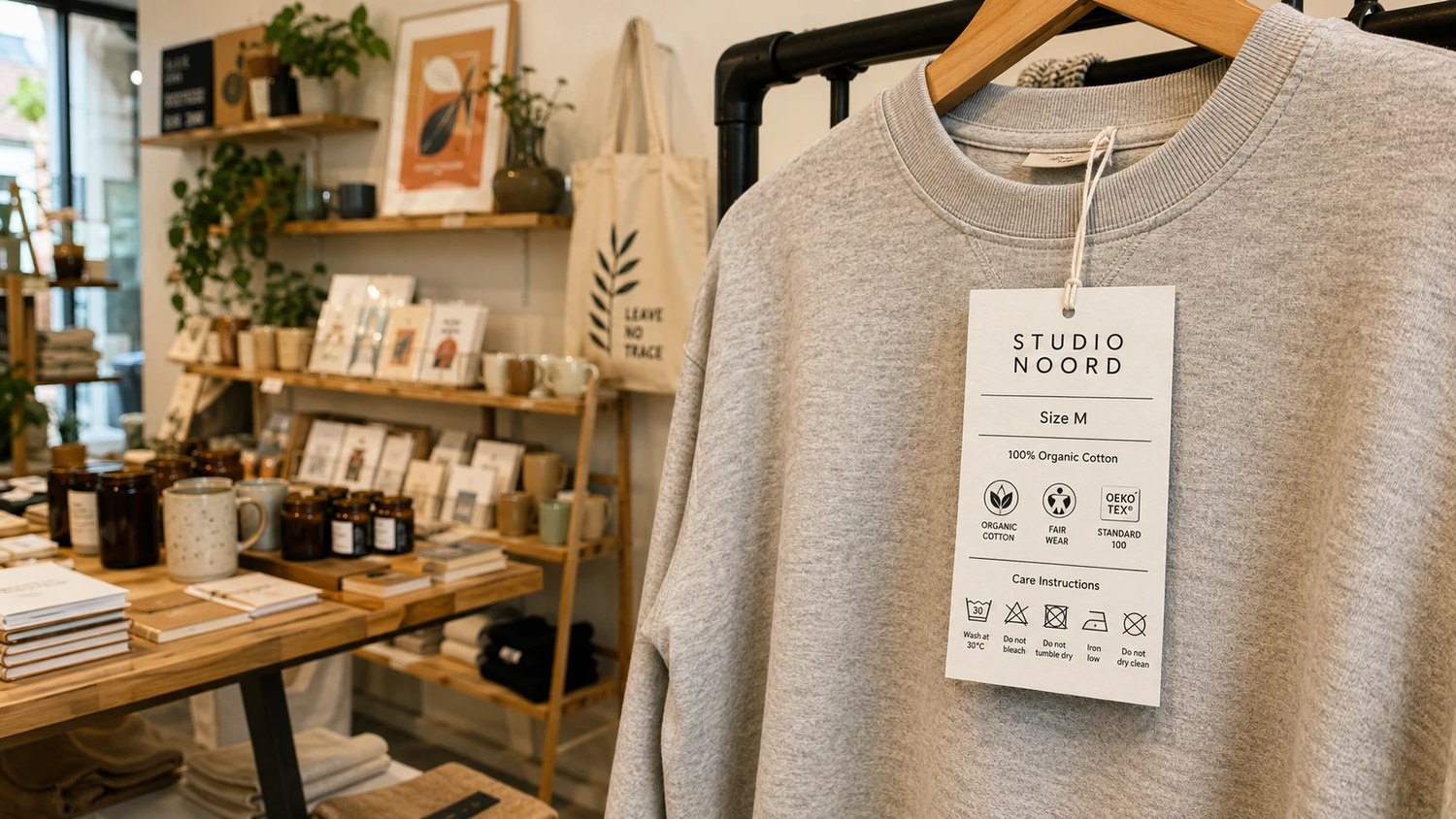
Wash printed clothing inside out at a maximum of 30°C. Preferably use a mild liquid colour detergent. Avoid aggressive products such as bleach, Oxi products, stain removers and optical brighteners. Preferably don't use fabric softener; if you do use it, apply a very minimal dose.
For standard printed clothing, 30°C is the safest choice. Only wash warmer than 30°C when both the garment and the print are suitable for it.
Which detergent?
For a longer lifespan of the print we recommend a mild liquid colour detergent. This is usually gentler on colours, textiles and prints than white detergent, universal detergent or washing powder for whites.
Preferably avoid detergents with claims such as “brilliant white”, “bright white”, “Oxi”, “active oxygen”, “stain remover” or “hygiene”. These products may contain ingredients that affect the colour, appearance or adhesion of the print.
Rule of thumb: choose a mild liquid colour detergent and check that there are no bleaching agents or optical brighteners on the label.
Avoid these words on the label
Detergents with the ingredients or claims below are less suitable for printed clothing:
Claims on the front
- Oxi / Oxy
- Active oxygen / actieve zuurstof
- Stain remover / vlekverwijderaar
- Whitening / stralend wit / bright white
- Hygiene / antibacterial
Ingredients on the label
- Oxygen bleaching agents
- Chlorine bleaching agents
- Optical brighteners / optische bleekmiddelen
- Optical brighteners / brighteners
- Sodium percarbonate / natriumpercarbonaat
- Hydrogen peroxide / waterstofperoxide
- TAED
Optical brighteners are not a classic bleaching agent, but they can change the colour impression of textiles and prints. We advise against them especially on dark clothing, vintage prints, water-based inks and transfers.
Workwear and higher wash temperatures
Some workwear is suitable for washing at 60°C or even 95°C. This only applies when it's clearly stated on the garment label and when the applied print, embroidery or personalisation is suitable for it.
For standard printed clothing we recommend a maximum of 30°C. Only wash at a higher temperature when this has been indicated in advance or when the item has been specifically supplied as 60°C- or 95°C-washable.
Even at higher wash temperatures it remains important to avoid aggressive detergents. Don't use bleach, oxygen bleach, Oxi products, stain removers or optical brighteners, unless this is expressly permitted for both the garment and the print.
Important: the maximum wash temperature of the garment does not automatically mean that the print can withstand the same temperature. Therefore always follow the strictest instruction.
Embroidery
Embroidery is generally less sensitive than printing or transfers. Embroidered workwear can often be washed at a higher temperature, but only when the garment label allows it.
Preferably wash clothing with embroidery inside out and close zips, press studs and Velcro to prevent damage to the embroidery. With embroidery too, avoid bleaching agents, Oxi products and aggressive stain removers, as these can affect the textile, yarn colour or other parts of the garment.
Industrial cleaning and laundry
Industrial laundry programmes are more intensive than normal domestic washing. They may use higher temperatures, stronger detergents, disinfectants, peroxide bleach and hot drying processes.
Only have printed or personalised workwear cleaned industrially when both the clothing and the print are suitable for it. If in doubt, we recommend discussing it in advance.
Drying, ironing and dry cleaning
- Preferably dry printed clothing by hanging it up.
- Preferably don't use the tumble dryer; if it's really necessary, choose a low temperature.
- Only use the tumble dryer when both the garment label and the print allow it.
- Iron never over the print — not even via the inside or with a cloth in between. Only iron the fabric around it, or not at all if that's not possible.
- Don't dry clean, unless both the garment label and the print allow it.
- Always follow the care label of the garment. Is our print instruction stricter? Then follow the strictest instruction.
- Embroidery is less sensitive than transfers, but always follow the garment label.
Care instructions in the clothing itself?
For private brands and private-label collections we can print the care instructions, the composition and your logo directly in the neck — a so-called tag print. This lets you run your own labels without a sewn-in brand label still being visible.
We don't sew in labels and don't use separate side-seam labels — only printing in the neck.